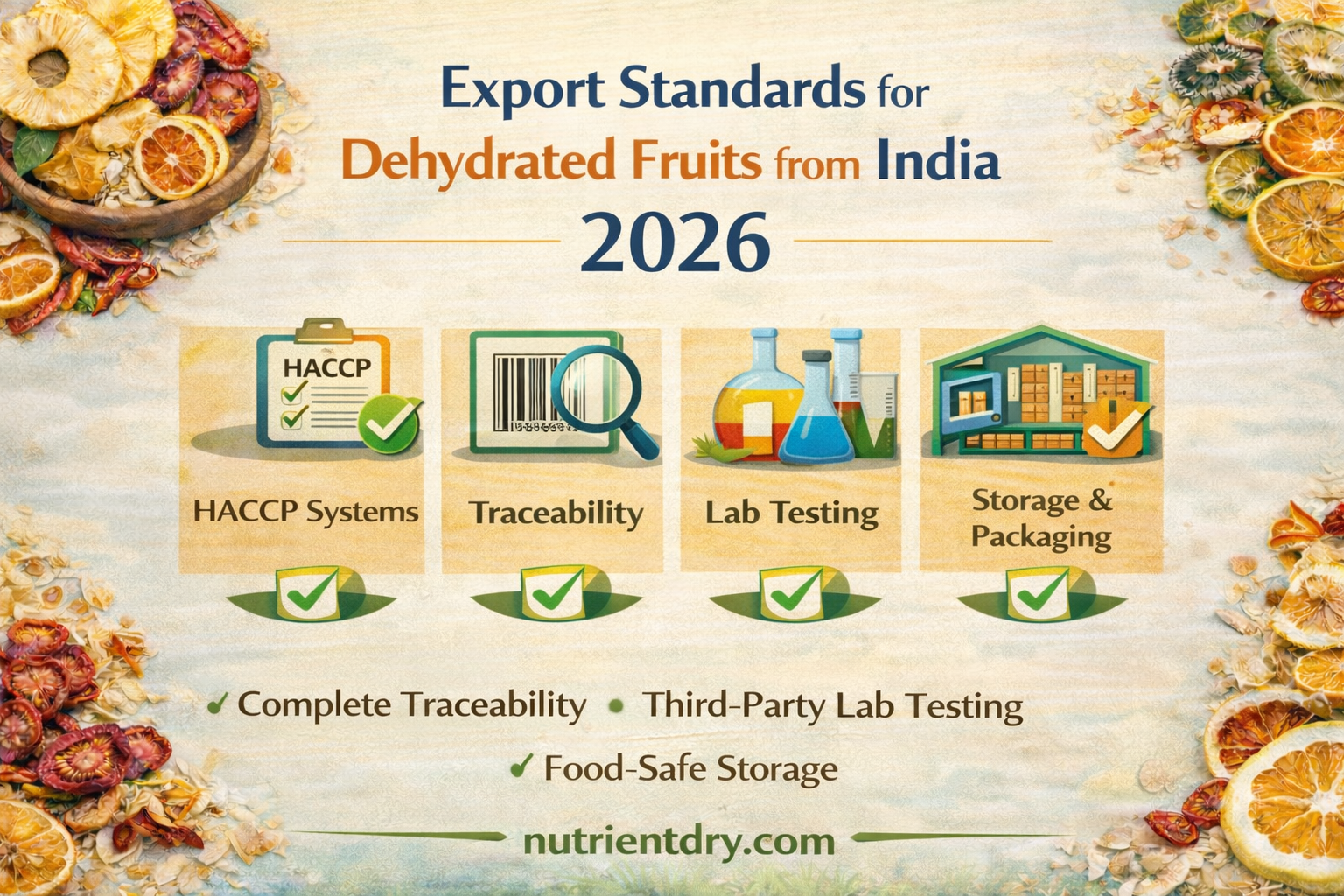
Unlock the potential of India’s dehydrated fruit market! India has become one of the fastest-growing exporters of processed and dehydrated fruits in the world. From dehydrated mango slices and banana chips to pomegranate arils and onion flakes, Indian products are now reaching global supermarkets, food brands, snack companies, and health-conscious consumers.
However, exporting dehydrated fruits is not just about drying fruits and packing them. It requires strict compliance with international food safety standards, documentation procedures, hygiene norms, and quality control systems. Global buyers expect products that are safe, traceable, properly labeled, and compliant with their country’s regulations.
Understanding export standards is essential for businesses that want to succeed in international markets. In this guide, we will explore regulatory bodies, documentation requirements, quality control measures, export challenges, and future trends — while also understanding how trusted suppliers like Nutrient Dry ensure global compliance and premium quality.
Overview of Export Standards for Dehydrated Fruits
Export standards are a set of rules and quality requirements that ensure dehydrated fruits meet the safety and regulatory norms of importing countries. These standards protect consumers and maintain confidence in international food trade.
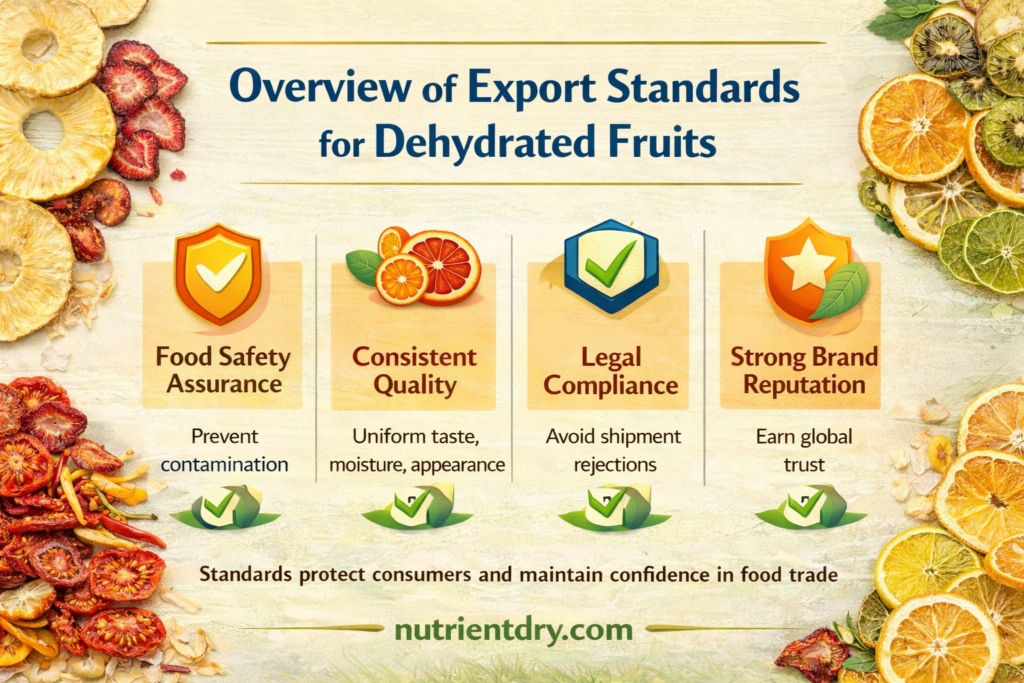
Why Export Standards Are Important
1. Food Safety Assurance
Export standards prevent contamination and ensure products are safe for consumption.
2. Consistent Product Quality
Buyers expect uniform taste, texture, moisture level, and appearance in every shipment.
3. Legal Compliance
Non-compliance can lead to shipment rejection, financial loss, or even bans.
4. Strong Brand Reputation
Meeting global standards builds long-term trust with international clients.
For example, countries like the USA and members of the European Union have strict limits on pesticide residues, microbial contamination, and labeling requirements. Exporters must meet both Indian regulations and the regulations of the importing country.
Companies like Nutrient Dry focus on international-grade processing systems and consistent quality monitoring to ensure smooth exports and repeat global orders.
Key Regulatory Bodies Governing Export Standards
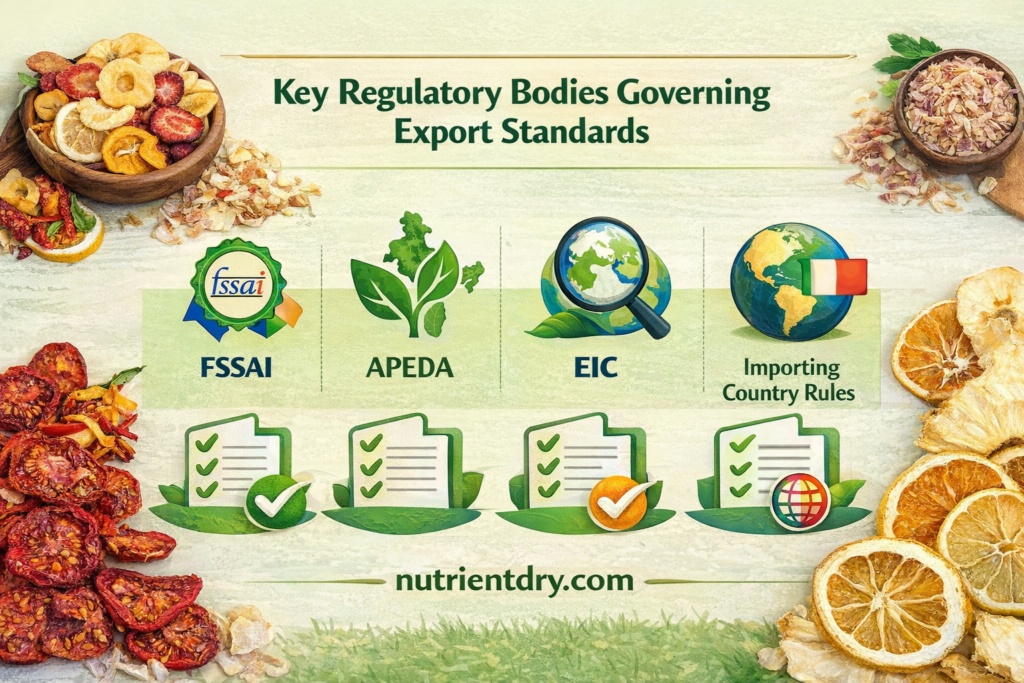
Exporting dehydrated fruits from India involves compliance with several regulatory authorities. These organizations ensure food safety, quality, and global competitiveness.
Food Safety and Standards Authority of India (FSSAI)
FSSAI regulates food safety standards within India. Every exporter must hold a valid FSSAI license. It ensures:
- Hygienic food handling
- Safe processing practices
- Permissible contaminant limits
- Proper labeling
Without FSSAI compliance, food products cannot legally be manufactured or exported.
Agricultural and Processed Food Products Export Development Authority (APEDA)
APEDA promotes agricultural exports from India. It provides exporter registration, guidance, and quality standards for processed food products, including dehydrated fruits.
APEDA registration is mandatory for exporters of agricultural and processed food items.
Export Inspection Council of India (EIC)
The EIC ensures exported goods meet the importing country’s quality standards. It conducts inspections and issues necessary certifications.
Importing Country Authorities
Exporters must also comply with the food safety regulations of the importing country. For example:
- USA requires FDA compliance
- European Union follows EFSA regulations
- Middle Eastern countries follow Gulf standards
Successful exporters stay updated with international rules and adjust their processes accordingly.
Quality Control Measures for Dehydrated Fruits
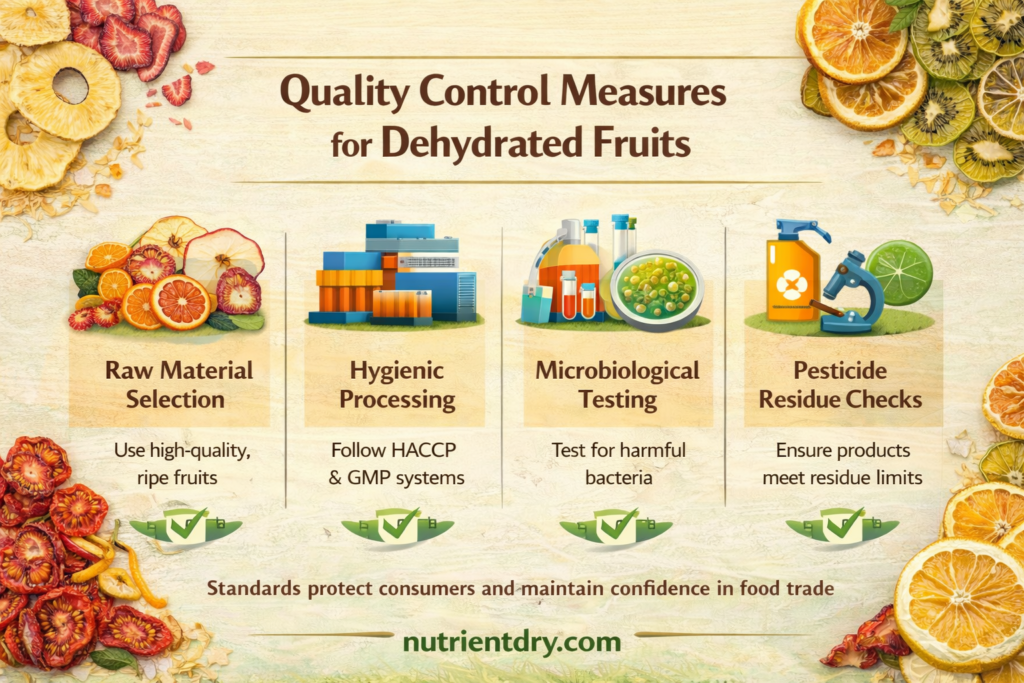
Quality control is the foundation of successful exports. Dehydrated fruits must be free from contamination and consistent in quality.
1. Selection of Raw Materials
Only high-quality, ripe, and disease-free fruits should be used. Poor raw materials lead to poor final products.
2. Hygienic Processing
Processing units must follow Good Manufacturing Practices (GMP) and HACCP systems. These systems identify potential hazards and control them during production.
3. Moisture Control
Maintaining the right moisture level is crucial. Excess moisture can cause fungal growth, while too little moisture can affect taste and texture.
4. Microbiological Testing
Regular lab testing checks for harmful bacteria such as:
- Salmonella
- E. coli
- Yeast and mold
5. Pesticide Residue Testing
Importing countries set Maximum Residue Limits (MRLs) for pesticides. Exporters must test their products to ensure compliance.
6. Metal Detection and Foreign Particle Control
Advanced metal detectors are used to eliminate contamination risks during packaging.
Brands like Nutrient Dry invest in strict quality checks, laboratory testing, and hygienic processing systems to maintain export-grade standards.
Essential Documentation for Exporting Dehydrated Fruits
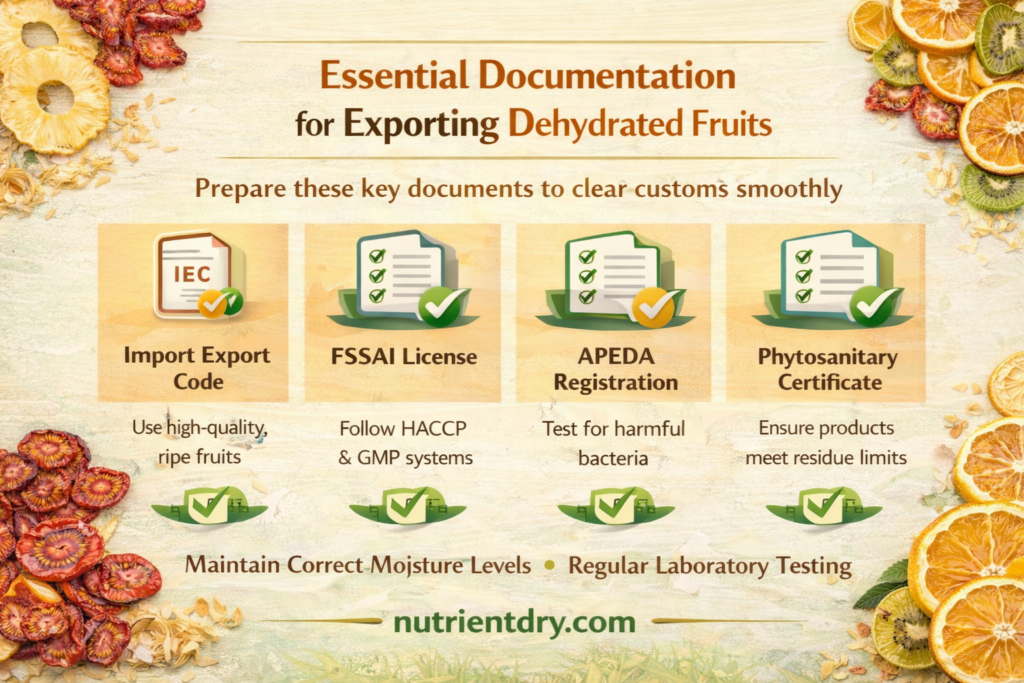
Documentation is a critical part of the export process. Missing or incorrect paperwork can cause shipment delays or rejection.
Important Documents Include:
- Import Export Code (IEC)
- FSSAI License
- APEDA Registration
- Phytosanitary Certificate
- Certificate of Origin
- Commercial Invoice
- Packing List
- Bill of Lading or Airway Bill
- Health Certificate
Some buyers may also require organic certification, laboratory reports, or third-party inspection certificates.
Professional exporters ensure all documents are accurate and complete before shipment.
Common Export Challenges and Solutions
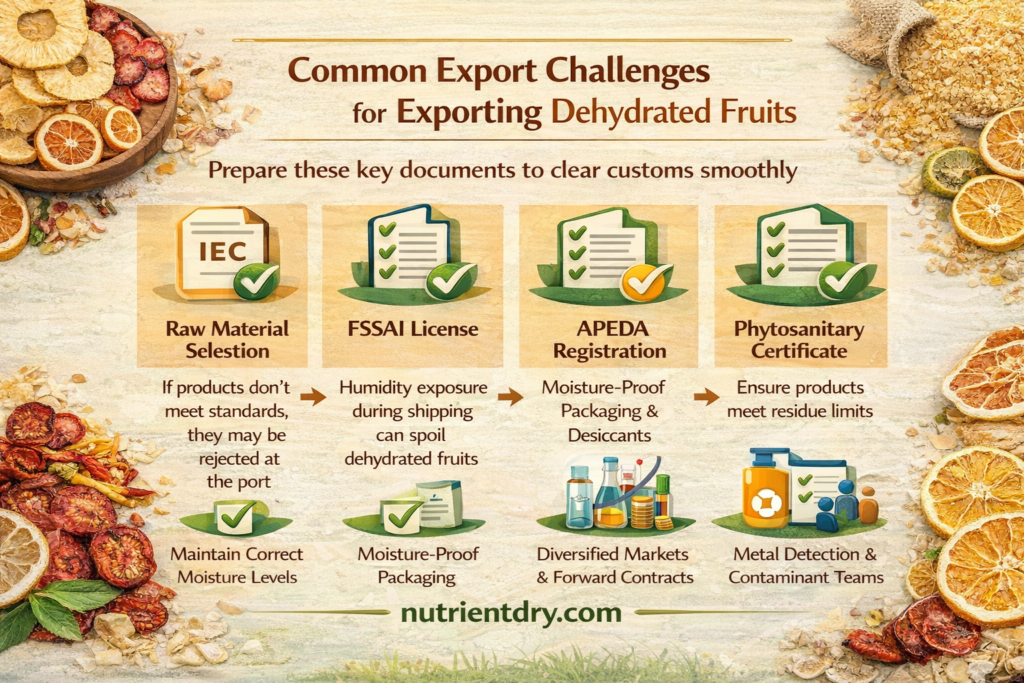
Exporting dehydrated fruits involves several challenges. However, proper planning can reduce risks.
1. Shipment Rejection
If products do not meet standards, they may be rejected at the port.
Solution: Conduct regular laboratory testing and internal audits.
2. Moisture Damage During Transit
Humidity exposure during shipping can spoil dehydrated fruits.
Solution: Use moisture-proof packaging and include desiccants.
3. Price Fluctuations
Raw material costs and currency rates may vary.
Solution: Diversify markets and use forward contracts.
4. Changing Regulations
International food safety standards frequently change.
Solution: Stay updated and maintain compliance teams.
Trusted exporters like Nutrient Dry minimize risks through systematic quality control and compliance monitoring.
Best Practices for Compliance with Export Standards

Exporters who follow best practices build long-term global partnerships.
- Implement HACCP and ISO food safety systems
- Maintain complete product traceability
- Conduct third-party laboratory testing
- Train staff in hygiene and quality standards
- Use export-grade, food-safe packaging
- Store products in controlled environments
Transparency and reliability make exporters more attractive to international buyers.
Impact of International Standards on Indian Dehydrated Fruit Exports
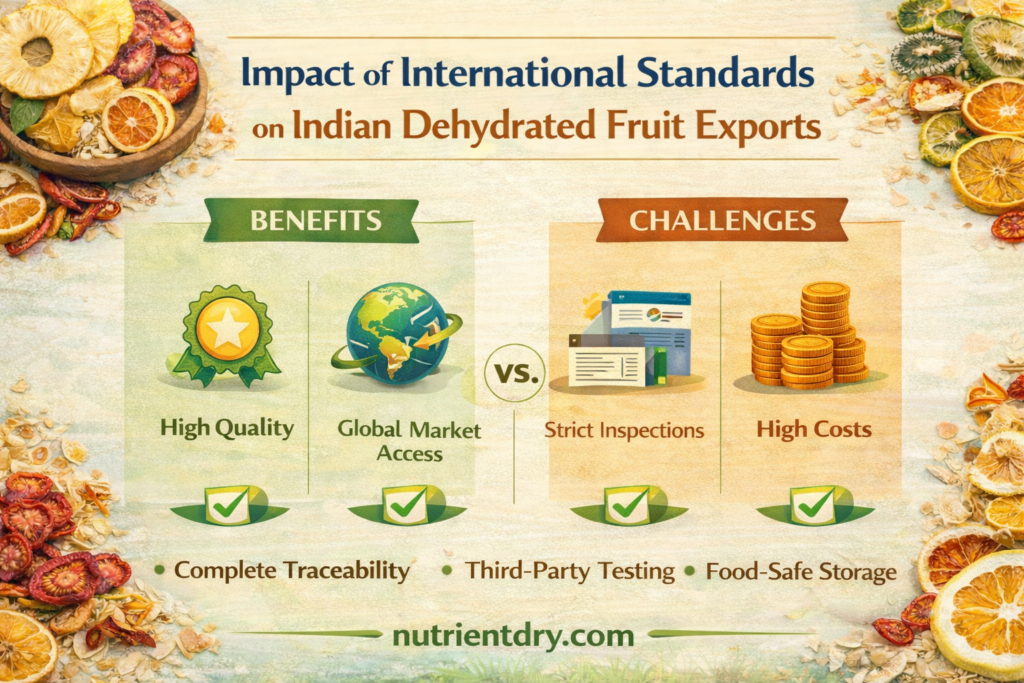
International standards have transformed the Indian dehydrated fruit industry.
Positive Impact
- Improved product quality
- Access to premium global markets
- Stronger international reputation
- Increased consumer trust
Challenges
- Higher testing and certification costs
- Strict inspections
- Continuous documentation requirements
However, exporters who invest in quality systems benefit from higher-value markets and stronger brand identity.
Future Trends in the Dehydrated Fruit Export Market

The global demand for healthy snacks and natural ingredients is rising rapidly. This creates huge opportunities for Indian exporters.
Emerging Trends
- Growing demand for organic dehydrated fruits
- Clean-label products with no preservatives
- Sustainable packaging solutions
- Private labeling services
- Increased exports to the USA, Europe, and Middle East
Companies that adapt to these trends will lead the market in the coming years. Nutrient Dry focuses on innovation, quality assurance, and global compliance to meet evolving consumer demands.
Conclusion and Final Thoughts on Exporting Dehydrated Fruits from India
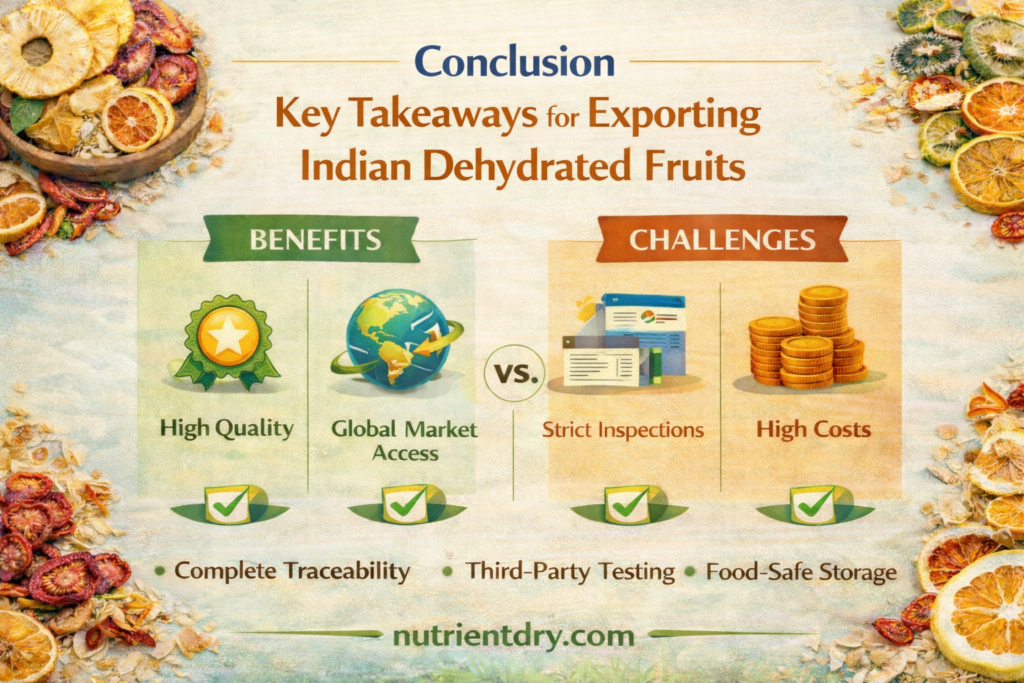
India has enormous potential in the global dehydrated fruit market. With strong agricultural production, advanced processing technology, and skilled manpower, Indian exporters are well-positioned for global success.
However, success depends on strict compliance with export standards, proper documentation, consistent quality control, and adaptation to international regulations.
If you are looking for a reliable supplier of premium dehydrated fruits from India, choose a brand that understands global compliance requirements and maintains high safety standards. Nutrient Dry combines advanced processing methods, strict quality control, and international certification compliance to deliver safe, nutritious, and export-ready dehydrated fruits worldwide.
Partner with Nutrient Dry to experience consistent quality, transparent processes, and global export expertise that supports your business growth.
FAQs
Export standards are rules that make sure dehydrated fruits are safe and high quality. Exporters must follow food safety rules set by FSSAI, register with APEDA, test products for bacteria and pesticides, use proper labeling, and prepare all required export documents. They must also follow the rules of the country they are exporting to.
Yes, APEDA registration is compulsory. Any company that wants to export processed agricultural products from India, including dehydrated fruits, must register with APEDA before exporting.
To export dehydrated fruits, businesses need important documents such as:
IEC (Import Export Code)
FSSAI License
APEDA Registration
Phytosanitary Certificate
Certificate of Origin
Commercial Invoice
Packing List
Bill of Lading or Airway Bill
These documents help clear customs smoothly and avoid shipment delays. packing list, and bill of lading.
Nutrient Dry follows strict quality control systems, complies with global export standards, and provides consistent, export-ready dehydrated fruits for international markets.