Discover how dehydration does more than just extend the shelf life of fruits and vegetables. This natural process helps preserve nutrients, enhance flavor, and reduce food waste. In a world moving toward clean and healthy eating, dehydrated foods are becoming a smart everyday choice. Let’s unlock the real nutrition behind dehydration.
Understanding Dehydration: The Process Explained
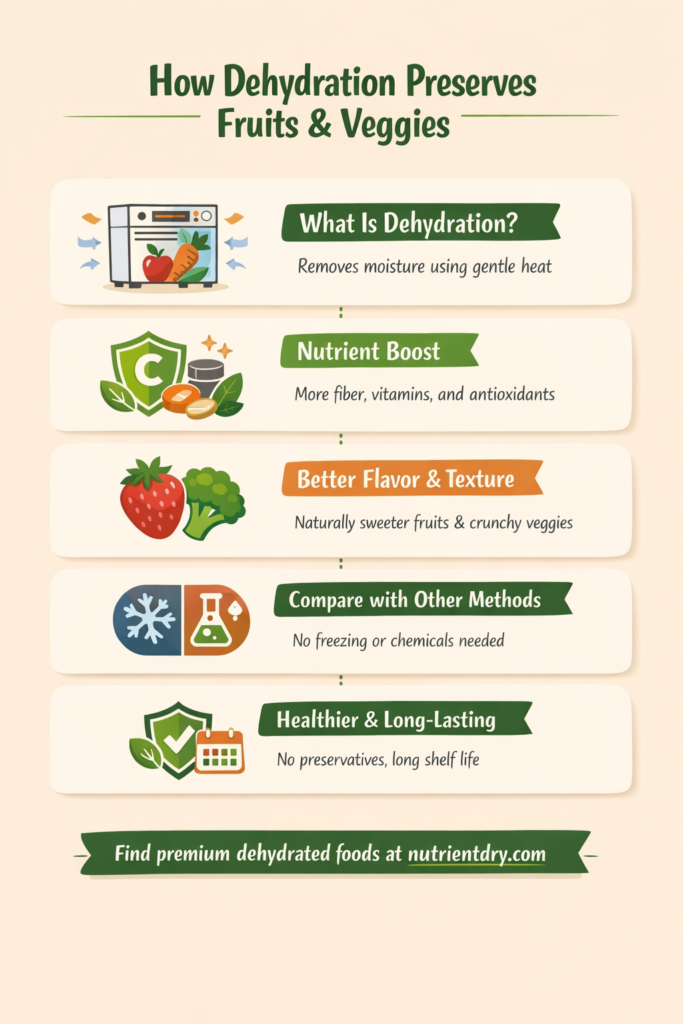
Dehydration is a simple yet powerful method of food preservation. It works by slowly removing moisture from fruits and vegetables using controlled heat and airflow.
Since bacteria and mold need water to grow, removing moisture helps food stay fresh for longer. Unlike heavy processing methods, dehydration keeps food close to its natural form. When done correctly, it protects both taste and nutrition.
The Nutritional Benefits of Dehydrated Fruits and Vegetables
Dehydrated fruits and vegetables are highly nutritious. When water is removed, nutrients become more concentrated.
They are rich in:
- Dietary fiber for digestion
- Essential minerals like potassium and iron
- Antioxidants that support overall health
This means you get more nutrition in smaller portions, making dehydrated foods efficient and satisfying.
How Dehydration Affects Flavor and Texture
One noticeable benefit of dehydration is improved flavor. Fruits taste naturally sweeter, while vegetables develop deeper and richer flavors—without added sugar.
Texture also changes:
- Fruits become chewy or crisp
- Vegetables turn crunchy and easy to use
These qualities make dehydrated foods great for snacking and cooking.
Comparing Dehydration to Other Preservation Methods
Not all preservation methods are equal.
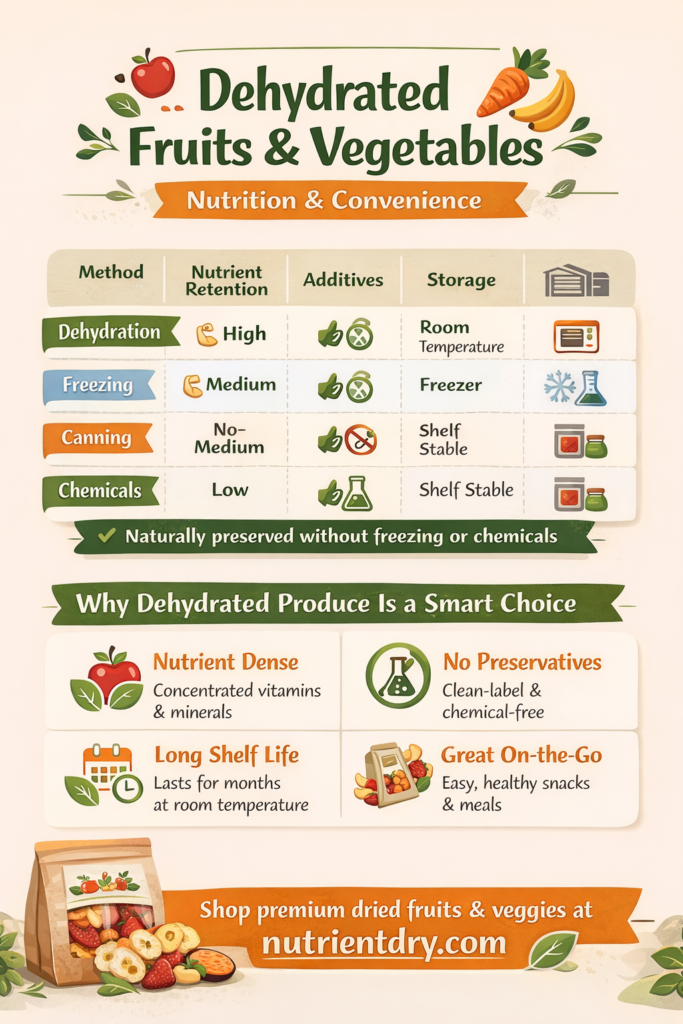
- Freezing needs constant electricity and can affect texture
- Canning uses high heat, which may reduce nutrients
- Chemical preservation involves artificial additives
Dehydration stands out because it is natural, clean, and effective. It preserves food without unnecessary chemicals or heavy processing.
The Science Behind Nutrient Retention in Dehydrated Foods
Some vitamins are sensitive to heat, which is why temperature control matters. Low-temperature dehydration helps retain important nutrients such as vitamins A and C.
Professional dehydration methods focus on balance—removing moisture while protecting nutrition. This ensures the food remains both safe and healthy.
Best Practices for Dehydrating Fruits and Vegetables at Home
If you dehydrate food at home, keep these tips in mind:
- Cut produce evenly
- Use low, steady heat
- Store in airtight containers
- Keep away from moisture and light
However, home dehydration can be inconsistent. Professionally dehydrated products offer better quality, hygiene, and longer shelf life.
Popular Fruits and Vegetables for Dehydration
Some fruits and vegetables are especially suitable for dehydration.
Fruits: Mango, apple, banana, pineapple, berries
Vegetables: Carrot, beetroot, tomato, spinach, onion
These options are versatile, nutritious, and easy to store.
Creative Ways to Use Dehydrated Foods
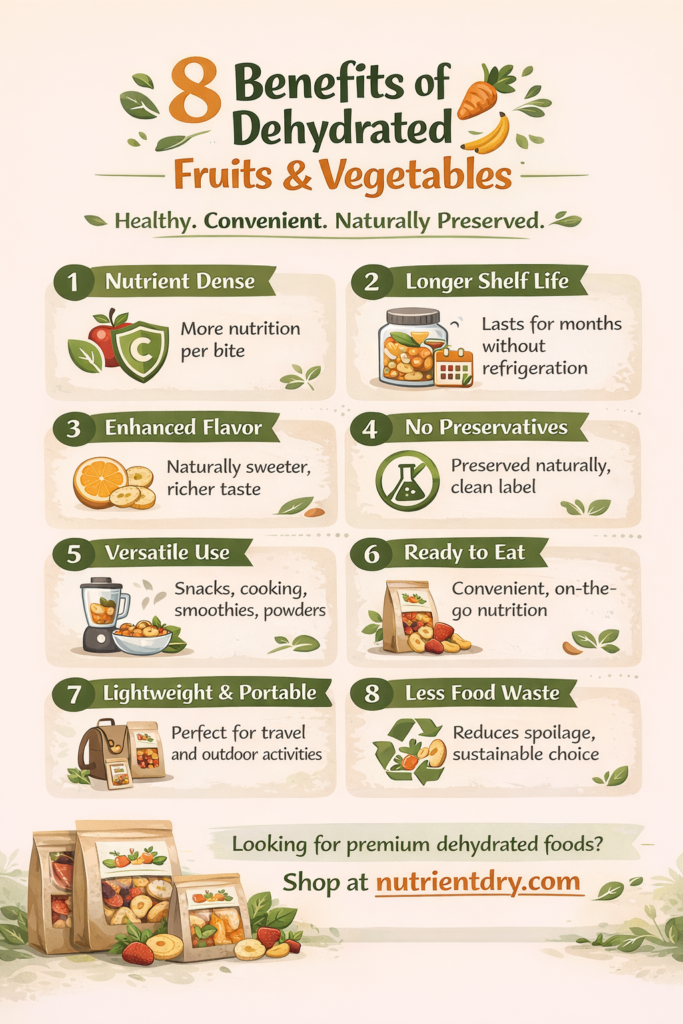
Dehydrated foods fit easily into daily meals. You can:
- Add fruits to breakfast bowls and smoothies
- Use vegetable powders in soups and curries
- Snack on fruit chips instead of fried snacks
- Mix dried veggies into rice and pasta
They save time while adding nutrition and flavor.
Common Myths About Dehydrated Foods
First Myth: Dehydrated foods are unhealthy
Fact: Proper dehydration preserves most nutrients
Second Myth: They are highly processed
Fact: Dehydration is one of the most natural methods available
Third Myth: They are only for emergencies
Fact: They are perfect for daily, healthy eating
Conclusion: Choosing Dehydrated Foods for a Healthier Lifestyle
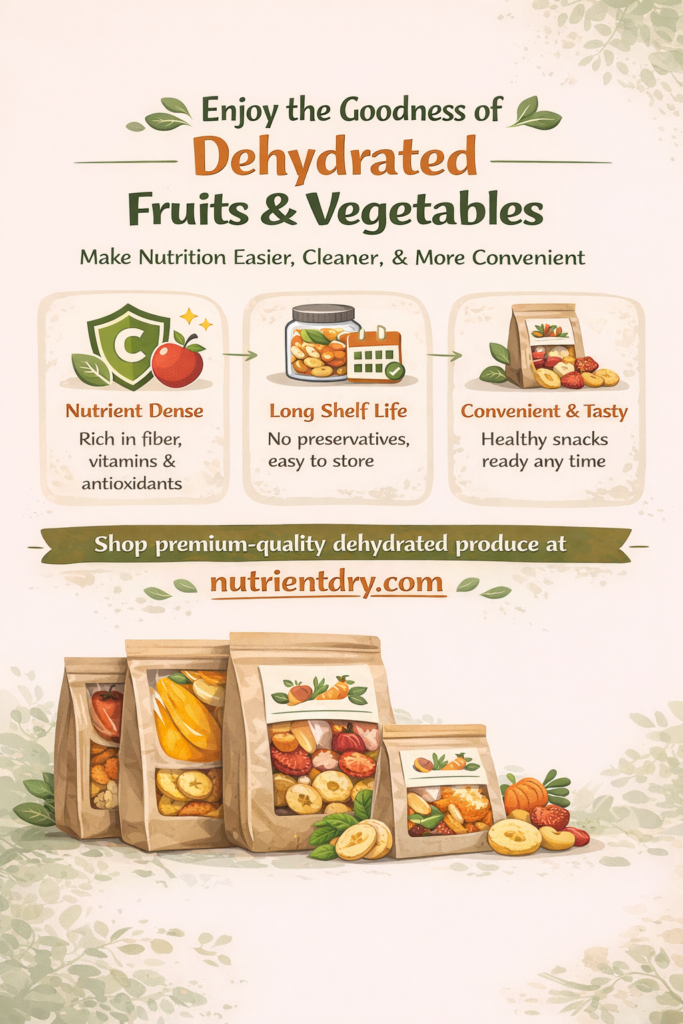
Dehydrated fruits and vegetables offer a smart mix of nutrition, convenience, and long shelf life. They help reduce food waste and support clean eating habits.
If you’re looking for naturally dehydrated, high-quality fruits and vegetables, explore the range available at nutrientdry.com. Make nutrition simpler, cleaner, and more convenient—every single day.
Frequently Asked Questions (FAQs)
Yes. When dehydrated properly, they retain most of their nutrients, including fiber and minerals.
Do dehydrated foods contain preservatives?
High-quality dehydrated foods are preserved naturally without artificial additives.
Yes. They are suitable for daily use and can be added to snacks, meals, and drinks.
Dehydrated foods do not require refrigeration and offer longer shelf life with minimal nutrient loss.
You can find high-quality, hygienically processed dehydrated produce at nutrientdry.com.